
What Makes ENGRAVION™ OVD a Next-Gen Hologram Security Technology?
Counterfeiters got better. Standard holograms, which were a reasonable deterrent twenty years ago, are now reproducible enough that basic versions don’t stop a determined operation. Brands across pharmaceuticals, FMCG, electronics, and government documentation needed something that the equipment in a back-room setup couldn’t touch. ENGRAVION™ OVD is where that need landed.
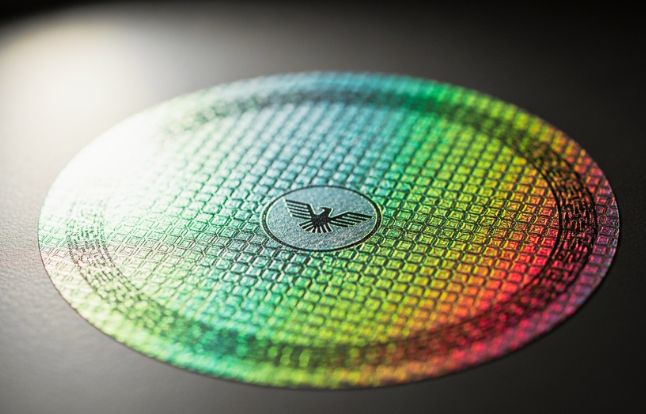
Micro-engraving instead of standard holographic printing. Multiple security layers. Visual effects that shift in ways cheap duplication can’t replicate. That’s the short version of what separates it from what came before.
What is ENGRAVION™ OVD?
An advanced hologram origination technology that uses precision micro-engraving to produce high-resolution optical designs. The visuals shift with viewing angle — depth, motion, colour — and the underlying structure is what makes verification straightforward and replication genuinely difficult.
Used across brand protection labels, anti-counterfeiting applications, government documents, and high-value product packaging.
Key Features That Make ENGRAVION™ OVD Next-Gen
1. Ultra-High Precision Micro-Engraving
The patterns are engraved at a resolution that conventional printing equipment can’t get close to. A counterfeiter trying to scan and reprint one ends up with something that looks wrong immediately under any real scrutiny.
2. Dynamic Optical Effects
- 3D depth perception
- Motion effects
- Color-shifting visuals
The movement isn’t a trick of light on ink. It’s a physical property of the engraved structure — which is why it behaves differently from anything produced on standard equipment.
3. Multi-Layered Security Architecture
Three levels, each serving a different verification purpose:
- Overt features — visible to the naked eye, first-line check
- Covert features — need magnification, second-line check
- Forensic features — lab-level verification for high-stakes authentication
Each layer works independently. All three together is what makes the system difficult to beat.
4. Customization for Brand Identity
Logos, text, hidden codes, individual serial numbers — all can be incorporated into the design. Every unit traceable, every label unique. That combination of branding and traceability is something generic security labels don’t offer.
5. Tamper-Evident Capabilities
Applied once, damaged permanently if removed. No clean peeling, no reuse, no transferring to a counterfeit product. The evidence of interference is visible and can’t be undone.
Why ENGRAVION™ Advanced OVD Technology is Better Than Traditional Holograms?
| Feature | Traditional Holograms | ENGRAVION™ OVD |
| Security Level | Moderate | Very High |
| Replication Risk | Possible | Extremely Difficult |
| Visual Effects | Basic | Advanced Dynamic Effects |
| Customization | Limited | Highly Customizable |
| Authentication | Simple | Multi-Level |
Industries Benefiting from ENGRAVION™ OVD Technology
- Pharmaceuticals
- FMCG & Consumer Goods
- Electronics
- Automotive Parts
- Government & Legal Documents
- Luxury Goods
Why Businesses Prefer Advanced OVD Technology like ENGRAVION™
A fake medicine that passes basic visual inspection is a genuine safety problem. A counterfeit auto part that makes it onto a shelf is a liability problem. Standard holograms stopped being enough once counterfeit operations started getting sophisticated enough to reproduce them.
ENGRAVION™ OVD works because the engraving precision and layered architecture aren’t things that scale down cheaply. Replicating it requires the same level of equipment and process — which is precisely the point.
Key Benefits:
- Prevents fake product circulation
- Builds customer trust
- Strengthens brand reputation
- Enables quick authentication
- Supports regulatory compliance
FAQs
1. What is ENGRAVION™ OVD technology?
A hologram security technology built on micro-engraving rather than standard holographic printing. The engraved structure produces optical effects — motion, depth, colour shifts — that change with viewing angle and can’t be reproduced on conventional equipment. Used wherever product authentication needs to be both easy to verify and hard to fake.
2. How is ENGRAVION™ different from regular holograms?
Regular holograms are printed. ENGRAVION™ is engraved — at a resolution and precision level that standard duplication methods can’t match. On top of that, it carries three separate security layers: what you see with the naked eye, what appears under magnification, and what requires lab verification. Most traditional holograms only operate on the first of those.
3. What industries use ENGRAVION™ OVD?
Pharmaceuticals, FMCG, electronics, automotive parts, government documentation, and luxury goods. Basically, any sector where a convincing fake costs the brand money, damages consumers, or creates a compliance problem.
4. Can ENGRAVION™ holograms be customised?
Yes — logos, serial numbers, hidden codes, brand-specific visual designs. The customisation isn’t just cosmetic either. Individual serial numbers tied to a verification system mean every unit is traceable, which adds a layer of authentication that generic labels don’t have.
5. How does ENGRAVION™ prevent counterfeiting?
The micro-engraved structure can’t be reproduced on standard printing equipment. The tamper-evident backing means the label can’t be lifted and moved. The layered security features mean that even a close visual copy fails the covert and forensic checks. Any one of those is a barrier — all three together is what makes large-scale counterfeiting of ENGRAVION™-protected products impractical.

Top 10 Career Coaches in Sydney

Importance of Security Labels for Energy and Water Meters in India

Top 10 Life Coaches in Melbourne, Australia
About The Author
